How to Buy a Home in Ohio: Step-by-Step Guide for Stark County Buyers
Buying a home in Ohio takes 30 to 45 days from accepted offer to closing, assuming your financing is in order. Ohio doesn’t require an attorney at the closing table. Title companies handle the paperwork, and the state’s seller disclosure law (ORC § 5302.30) gives you a written account of the home’s known condition before you commit. Here’s what to expect at every step, with real numbers from the Stark County market.
Last updated: 2026-06-04.
Step 1: Get Pre-Approved Before You Search
There’s a difference between pre-qualification and pre-approval that actually matters in this market. Pre-qualification is math the lender does based on what you told them over the phone. Pre-approval means they’ve pulled your credit, verified your income and employment, and put a loan commitment in writing. Sellers in Stark County want the second one, and in a market where homes sold at exactly 100.0% of list price in March 2026 (per Stark County MLS data), your offer needs to look ready from the first page.
On a $210,000 home (the county-wide median as of March 2026), plan for $4,200 to $6,300 in closing costs. That’s 2-3% of the purchase price and it covers appraisal, home inspection, title insurance, lender fees, and recording at the Stark County Recorder’s office. We’ll break each cost down as we go through the steps. Down payment is separate.
If you’re a first-time buyer, or haven’t owned a home in the last three years, OHFA’s Down Payment Assistance offers 3% (conventional) or 3.5% (FHA, VA, USDA) of the purchase price, forgiven after seven years. Our guide to first-time homebuyer programs in Ohio covers the income limits and credit requirements.
Step 2: Find the Right Neighborhood for Your Budget
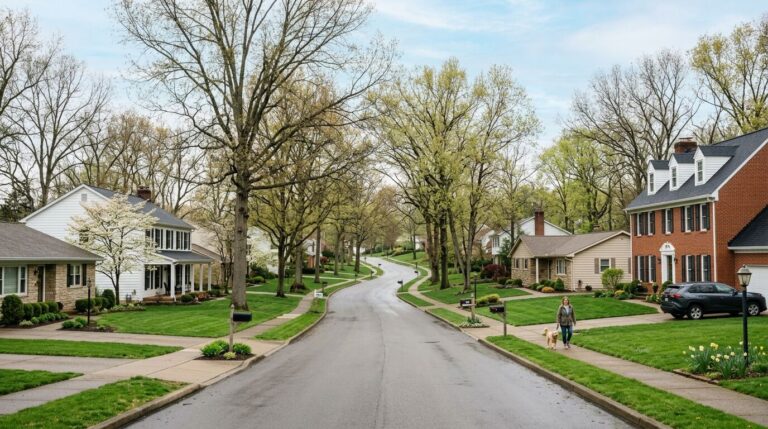
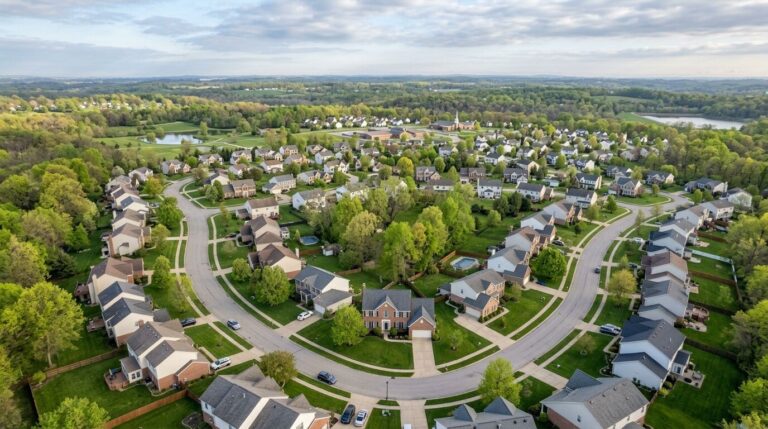
Choose your neighborhood before you choose a house. In Stark County, the same-size home can cost $110,000 more or less depending on the school district, and that difference runs straight through both your monthly payment and your annual tax bill. Compare areas on price, school district, and millage rate before you start touring homes, or you’ll end up making the decision backward.
| Neighborhood | Median Sold Price (March 2026) | School District | Tax Rate (mills) | Est. Annual Tax on $200K Home | Avg. Days on Market |
|---|---|---|---|---|---|
| Jackson Township | $360,500 | Jackson Local | 46.93 | $3,285 | 47.9 |
| Lake Township ⚠ | $361,000 | Lake Local / Northwest Local | 52.47 | $3,673 | 53.6 |
| North Canton | $273,000 | North Canton CSD | 50.12 | $3,508 | 45.9 |
| Perry Township | $252,000 | Perry Local | 51.29 | $3,590 | 54.1 |
| Plain Township | $249,750 | Plain Local | 41.65 | $2,916 | 43.9 |
| Stark County (overall) | $210,000 | Multiple | varies | varies | varies |
⚠ Lake Township had 9 closed sales in March 2026 (below the 10-transaction minimum for statistical robustness). Its median price and days-on-market figures are indicative, not statistically robust. Stark County MLS, March 2026.
Plain Township doesn’t get the attention it deserves. At a $249,750 median and a 41.65 mill rate, it’s got the lowest property tax burden of the major Stark County markets, though smaller Marlington Local runs lower still at 36.66 mills (Ohio millage applies to taxable value, 35 percent of market value). That’s roughly $600 to $700 less per year in taxes than you’d pay in North Canton or Perry Township on a comparable home. GlenOak High School serves the district, there’s good highway access toward both Canton and Akron, and the inventory leans toward newer construction in the 44720 and 44721 ZIPs. If your budget is tight, Plain Township gives you more house for the money than most buyers expect.
Jackson Township is the county’s most competitive market. Homes near Belden Village on the 44718 side move quickly, and the Jackson Local Schools name carries weight for families with kids. If $300,000 is your ceiling in Jackson, expect older inventory or the western edges of the township. Our detailed breakdowns of Jackson Township, North Canton, and Plain Township cover the neighborhood specifics in full.
Step 3: Make an Offer and Pay Earnest Money
Once you’ve found the right home, your agent submits a purchase agreement. Earnest money goes with it. Based on what I see in Stark County deals (no published Ohio standard governs the amount), a flat $1,000 is the working norm here. Deposits run as low as $500, and they climb toward 1% of the price ($2,100 on a $210,000 home) when a buyer wants the offer to stand out. Earnest money isn’t a fee you lose at closing. It’s held in escrow by the title company and applied to your down payment or closing costs when the sale completes. If you exit through a valid contingency, you get it back. If you just change your mind with no covered reason, you don’t.
The contingencies you need in a standard Ohio purchase agreement are financing, inspection, and appraisal. The financing contingency lets you exit if your loan falls through before closing. The inspection contingency gives you time to walk away or negotiate based on what the inspector finds. The appraisal contingency protects you if the home appraises below the purchase price and you don’t want to cover the gap out of pocket.
Some buyers waive the inspection contingency to make their offer more competitive. My recommendation: don’t, unless you’re buying a property you plan to gut and renovate anyway. A $400 inspection can surface a $15,000 roof or a heat exchanger that’s cracked and pushing carbon monoxide. That’s information worth having before you own the house, regardless of how competitive the market feels in the moment.
Ohio’s seller disclosure form, required under ORC § 5302.30, is a detailed written record of everything the seller knows about the home’s condition: roof, HVAC, plumbing, electrical, any past water intrusion, structural issues, known defects, and relevant easements or violations. Read it carefully. A checked “no known issues” box doesn’t mean there aren’t any; it means the seller wasn’t aware. The inspection is still your responsibility.
Step 4: Schedule Inspection and Appraisal
The inspection happens first, typically in the first week after an accepted offer. You choose the inspector and you pay for it: $400 to $525 is a normal range for a standard single-family home in Ohio. Don’t take a referral from the seller’s agent. The inspector works for you and that relationship needs to be clean.
The inspection report will have a list. Always does. Focus on the expensive stuff: foundation movement, roof age and condition, water in the basement or crawlspace, HVAC systems on borrowed time. Minor cosmetic items are noise. Your choices after inspection are asking for repairs, negotiating a closing credit, renegotiating the price, or walking away. In a market where sellers are getting 100.0% of asking price, a twenty-item cosmetic punch list isn’t a winning ask. Focus on safety, structure, and systems.
Your lender orders the appraisal, usually in the second week. You pay for it: $400 to $600 for a traditional appraisal. The appraiser’s job is to confirm the home is worth what you’re paying, which protects the bank more than it protects you. If the appraisal comes in below your purchase price, you can renegotiate the price, cover the gap with cash, or exit using your appraisal contingency. Plan on 30 to 45 days total from offer to close; scheduling the inspection and appraisal alone eats up most of the first two weeks.
Step 5: Clear Title and Prepare to Close
Get a title search ordered as soon as you’re under contract. In most Stark County transactions, a title company handles this automatically as part of the closing process. Their job is to search the home’s chain of title going back decades, looking for unpaid liens, judgment liens, tax delinquencies, easements, or ownership disputes that could interfere with your purchase. Clean title means the seller has the legal right to transfer ownership to you. Without it, the sale can’t close.
You’ll have two title insurance policies: one covering the lender (required by your mortgage), one covering you as the owner (optional, but worth buying). As of January 1, 2026, Ohio title insurance costs $4.50 per thousand of purchase price. On a $210,000 home, the owner’s policy is $945. It’s a one-time premium that protects you for as long as you own the property. Title defects don’t always surface at closing. Sometimes they show up years later when you try to sell or refinance. For $945, you’re buying the right not to deal with that problem yourself when it does.
As an NAR e-Pro certified agent who has worked through dozens of Stark County closings, I tell buyers the same thing every time: the lender’s policy protects the bank, not you. If you skip the owner’s policy to save $945 on a $210,000 purchase, you’re taking on a risk that’s hard to quantify until it’s too late to do anything about it.
Ohio doesn’t require an attorney at the table; title companies handle closings in Stark County. A few days before closing, your lender sends a Closing Disclosure with the final numbers. Compare it to your Loan Estimate. Numbers shouldn’t change significantly. If they do, ask your lender before you show up to sign.
Step 6: Close on Your New Home
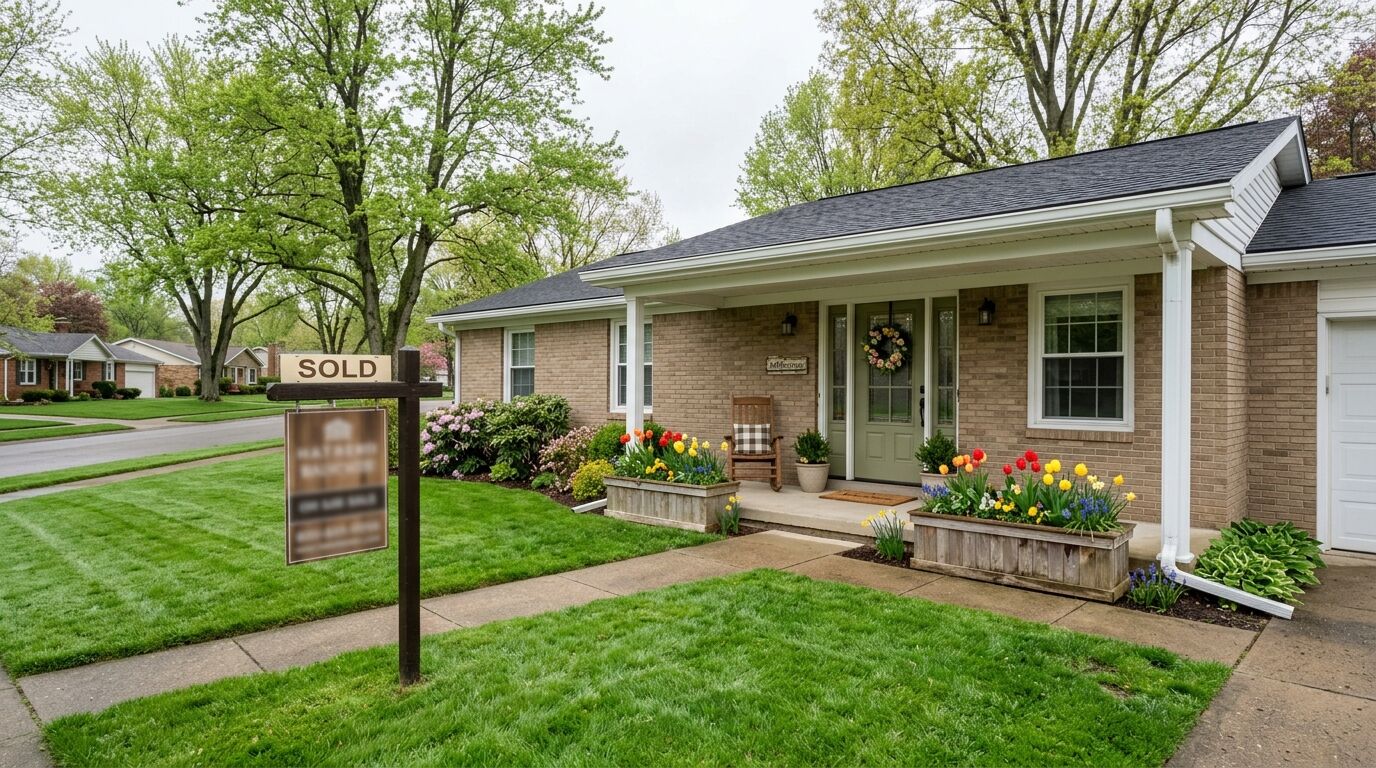
Sign the documents, get the keys, record the deed. That’s the closing. Here’s what it looks like at the title company’s office in Stark County.
The appointment takes 60 to 90 minutes. Bring a government-issued photo ID and your closing funds as a wire or cashier’s check. Personal checks aren’t accepted for amounts this size. Before you arrive, your lender will have confirmed the loan is funded and the title company has everything ready.
At the table, you’ll sign the loan package from your lender (promissory note, mortgage, and federal disclosure forms) and the closing documents from the title company (settlement statement, deed, transfer forms). The seller signs the deed over to you. The closing agent walks you through each document. Ask if anything is unclear before you sign.
The Stark County Recorder’s office makes the transfer official when the deed records. The fee is $34 for the first two pages plus $8 per additional page. Most deeds record same-day or the following business day. Once it records, you’re the owner of record. You leave with keys, and the recorder finishes the paperwork shortly after.
Common Mistakes to Avoid
Treating pre-qualification as pre-approval. If the lender hasn’t verified your income and credit, you don’t have a pre-approval. You have a phone estimate, and sellers know the difference.
Skipping the owner’s title insurance policy. The lender’s policy covers the bank, not you. On a $210,000 home, $945 buys coverage for as long as you own it. That’s the one people regret skipping.
Planning for a 21-day close on a conventional loan. Budget 30 to 45 days. The appraiser’s schedule alone can run a week longer than you expect.
Ignoring the seller disclosure. ORC § 5302.30 requires sellers to document what they know about the home. Read it before you waive contingencies.
Budgeting only for the down payment. On a $210,000 purchase, closing costs add $4,200 to $6,300 more. Both amounts need to be in your account before you make an offer.
Frequently Asked Questions
How much are closing costs for buyers in Ohio?
Ohio buyers typically pay 2-3% of the purchase price in closing costs. On a $210,000 home (the Stark County median as of March 2026), that’s $4,200 to $6,300. The main items: lender origination fee ($500-$1,500), appraisal ($400-$600), home inspection ($400-$525), lender’s title insurance ($945 at $4.50 per thousand), owner’s title insurance ($945), Stark County Recorder fees ($34-$50 for the deed), and prepaid items including homeowners insurance and escrow reserves for property taxes.
Who pays closing costs in Ohio, buyer or seller?
Buyers and sellers each pay distinct portions. Sellers pay the state and Stark County conveyance fees (combined $5.00 per thousand of purchase price plus $0.50 per parcel), deed recording, and typically the owner’s title insurance policy. Buyers pay the appraisal, home inspection, lender fees, and their share of title insurance. Some costs are negotiable. Asking the seller to cover buyer closing costs is possible, but in Stark County’s current market (100.0% list-to-sale ratio, March 2026), that’s not a strategy you should count on.
How much earnest money do I need to buy a home in Ohio?
Based on local market practice (no published Ohio standard governs the amount), a flat $1,000 is the working norm in Stark County, with deposits from $500 up toward 1% of the price ($2,100 on a $210,000 home) on competitive offers. It’s held in escrow by the title company and applied to your down payment or closing costs at closing. If you exit using a valid contingency (financing, inspection, or appraisal), you get it back. Back out without a covered reason, and you don’t.
Do I need a real estate attorney to buy a home in Ohio?
No. Ohio doesn’t require an attorney to close a real estate transaction. Title companies handle closings throughout Stark County. If you want an attorney to review your purchase agreement before you sign, budget $300 to $800. That’s optional, and most buyers in the area skip it.
How long does the home buying process take in Ohio?
From accepted offer to closing, plan for 30 to 45 days. A 30-day close works with a conventional loan and no complications. FHA and VA loans sometimes run longer because of additional requirements. The inspection, appraisal, and loan processing steps all have scheduling lead times that add up. The closing appointment itself takes 60 to 90 minutes at the title company.
What is title insurance and do I need it in Ohio?
Title insurance protects against defects in the home’s ownership history: unpaid liens, recording errors, ownership disputes, or judgments that surface after you close. Ohio title insurance costs $4.50 per thousand of purchase price as of January 1, 2026 (the first rate increase since 2002). On a $210,000 home, the owner’s policy is $945. Your lender requires a policy covering their interest, which you also pay for. The owner’s policy is optional, but skipping it means you’re personally on the hook if a title problem surfaces later.
What does the Ohio seller disclosure require?
Under ORC § 5302.30, Ohio sellers complete a written form covering everything they know about the property’s condition: roof, HVAC, plumbing, electrical, basement or crawlspace water issues, structural problems, past damage, known defects, and any easements or violations they’re aware of. Sellers disclose what they know. They’re not required to perform inspections or discover new problems. The form is signed, dated, and becomes part of the transaction record. Read it before waiving anything.
Can I roll closing costs into my mortgage in Ohio?
Not directly. Conventional purchase mortgages don’t allow you to add closing costs to the loan balance. But there are options. Some lenders offer a lender credit that covers part of your closing costs in exchange for a slightly higher interest rate. You can negotiate for the seller to contribute to your costs, though that’s harder to pull off in Stark County’s current market. OHFA’s Down Payment Assistance provides 3% (conventional) or 3.5% (FHA, VA, USDA) of the purchase price for eligible first-time buyers, which can free up cash to cover the closing costs due at the table. See our full guide to Ohio’s first-time buyer programs for current income and credit requirements.
Data sources: Stark County MLS, March 2026 (204 transactions). Stark County Recorder fee schedule, effective October 24, 2024. Ohio Title Insurance Rating Bureau, effective January 1, 2026. Stark County Auditor CAMA data, 2025 tax year.

Have questions about this?
I'm happy to walk you through anything. No pressure, no pitch. Just real answers from someone who knows the area.